Do You Need a Contact Tank for Ozone Water Treatment?
A contact tank in ozone water treatment is used to maximize the time ozone stays in contact with water, improving…
 CONTACT US
At Absolute Ozone, we are often asked whether an ozone generator can operate using regular air as its feed gas. While ozone can be generated from air, using atmospheric air is generally not the best choice for industrial ozone applications where high ozone concentration, efficient mass transfer, and reliable long-term operation are required.
The main reason is simple: atmospheric air contains only about 21% oxygen, while the remainder is primarily nitrogen. Because ozone is produced from oxygen, a lower oxygen concentration in the feed gas generally results in lower ozone concentrations and increased gas volumes for a given ozone production rate.
For industrial applications, using an oxygen-enriched feed gas can provide significant advantages in ozone concentration, system efficiency, maintenance, and overall process performance.
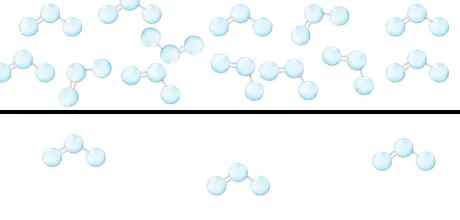
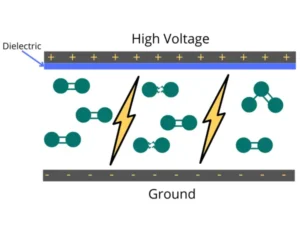
One of the challenges associated with using air as an ozone feed gas is the presence of nitrogen. During electrical-discharge ozone generation, nitrogen and oxygen can participate in secondary reactions that form nitrogen oxides (NOx) and other compounds.
These reactions may contribute to deposits or coatings within the ozone-generation cell. Accumulation of these deposits can interfere with electrical discharge performance and heat transfer, potentially reducing ozone production and increasing maintenance requirements.
Using an oxygen-enriched feed gas significantly reduces the amount of nitrogen entering the ozone generator and can therefore help reduce nitrogen-related reactions and contamination within the ozone cell.
The most significant limitation of atmospheric air is its relatively low oxygen concentration. With approximately 21% oxygen available in air, ozone generators operating on air generally produce substantially lower ozone concentrations than systems supplied with oxygen-enriched gas.
Ozone concentration is particularly important for applications where ozone must be efficiently transferred into water or where high oxidation rates are required. Higher ozone concentration in the feed gas can improve mass-transfer efficiency and help achieve higher dissolved ozone concentrations.
As a general guideline, increasing ozone concentration can significantly improve the proportion of generated ozone that can be effectively transferred into water:
| O₃ Concentration (% wt) | Percentage of O₃ Dissolved in Water |
|---|---|
| 1% wt | 10% |
| 3% wt | 20–30% |
| 5–7% wt | 50–70% |
| 8–10% wt | 80–90% |
| 10–14% wt | 95% |
| 14–22% wt | 97% |
*Actual ozone transfer efficiency depends on factors such as ozone concentration, gas flow, water temperature, pressure, water chemistry, contact system design, and injection efficiency. These values are general guidelines, not guaranteed performance.
Lower ozone concentration does not only affect the ozone generator. It can also affect the entire treatment process.
When ozone is transferred into water, a higher gas-phase ozone concentration provides a greater driving force for mass transfer. Lower concentrations may therefore require higher gas flow rates, larger contact systems, or longer contact times to achieve the desired dissolved ozone concentration.
For applications involving the treatment of gases or solids, lower ozone concentration can also reduce the rate at which ozone is delivered to the target material. This may increase treatment time and gas-handling requirements.
For example, a generator producing a given ozone output at a high concentration can deliver that ozone using substantially less carrier gas than the same ozone output at a much lower concentration. This difference can have a significant impact on the design and operating cost of the complete ozone treatment system.
Because air contains much less oxygen than an oxygen-enriched feed gas, achieving a comparable ozone production rate generally requires handling a larger volume of feed gas.
Higher gas flow rates can increase the required capacity of compressors, dryers, piping, injectors, contact systems, and off-gas treatment equipment. In water treatment applications, excessive gas flow can also make efficient ozone dissolution more challenging.
Using an oxygen-enriched feed gas allows the ozone generator to operate with a smaller gas volume while producing ozone at a higher concentration. This can simplify the design of the overall ozone treatment system.
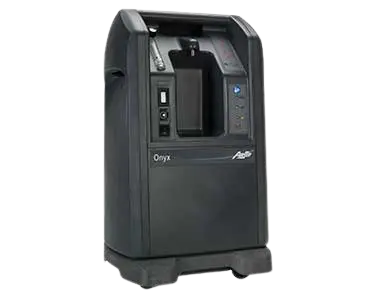
Using an oxygen-enriched feed gas allows the ozone generator to operate with a smaller gas volume while producing ozone at a higher concentration. This can simplify the design of the overall ozone treatment system.
Not all ozone generators are designed to operate with atmospheric air. Some systems are specifically engineered for oxygen or oxygen-enriched feed gas and require a minimum oxygen concentration to achieve their rated ozone production and concentration.
For example, high-concentration ozone generators may have minimum feed-gas requirements that cannot be met by atmospheric air. Operating such equipment outside its intended feed-gas specifications can result in reduced ozone production, unstable operation, or the inability to reach the required ozone concentration.
Always check the manufacturer’s specified feed-gas requirements before connecting an ozone generator to an air supply.
At first glance, using atmospheric air may appear to be the more economical option because oxygen does not need to be supplied separately. However, air-based ozone generation requires the feed gas to be properly dried and conditioned because moisture can negatively affect ozone-generation performance and contribute to unwanted reactions within the ozone cell.
As a result, an air-fed ozone system may require equipment such as an air compressor, filtration, drying, and gas conditioning. An oxygen-fed system, on the other hand, typically uses an oxygen concentrator or another suitable oxygen source to provide a controlled feed gas with a higher oxygen concentration.
The overall cost should therefore be evaluated based on the complete system rather than the cost of the feed gas alone. Equipment requirements, energy consumption, maintenance, ozone concentration, transfer efficiency, and treatment performance all contribute to the total operating cost.
For most industrial ozone applications requiring high ozone concentration and reliable performance, oxygen-enriched feed gas is the preferred choice.
Compared with atmospheric air, oxygen feed can provide:
These advantages are particularly important in applications where ozone must be efficiently dissolved into water or delivered at high concentration to achieve a specific oxidation or disinfection objective.
Although ozone can be generated using atmospheric air, regular air is generally not the most effective feed gas for industrial ozone generation. Its low oxygen concentration and high nitrogen content can lead to lower ozone concentrations, higher gas flow requirements, more challenging ozone transfer, and increased potential for nitrogen-related reactions within the ozone-generation cell.
For industrial applications, an oxygen-enriched feed gas can provide a more efficient and controllable source of ozone. Higher ozone concentration can improve mass transfer, reduce gas-handling requirements, and help the overall treatment system achieve its performance objectives more effectively.
When selecting an ozone system, the feed-gas source should therefore be considered as an integral part of the system design—not simply as an operating expense. Choosing the appropriate oxygen supply can have a significant impact on ozone concentration, generator performance, treatment efficiency, maintenance, and the total cost of ownership.
At Absolute Ozone, our industrial ozone systems are designed around the specific feed-gas, ozone concentration, production, and treatment requirements of each application.

By submitting this form, you agree to receive communications from us as described in our privacy policy.