Ozone Vs. Chlorine for Water Disinfection
Ozone and chlorine are both widely used for water disinfection, but ozone offers several important advantages in speed, oxidation strength,…
 CONTACT US
Ozone (O3) is a highly reactive form of oxygen consisting of three oxygen atoms. It occurs naturally in the atmosphere through processes involving ultraviolet (UV) radiation and electrical discharges such as lightning. Ozone can also be intentionally generated using specialized equipment for water treatment, air treatment, odour control, and a wide range of industrial applications.
Because ozone is unstable and decomposes relatively quickly, it is generally produced on-site and used as needed rather than stored or transported. This makes ozone generators an important technology for applications that require a powerful oxidizing agent without storing large quantities of conventional chemical oxidants.
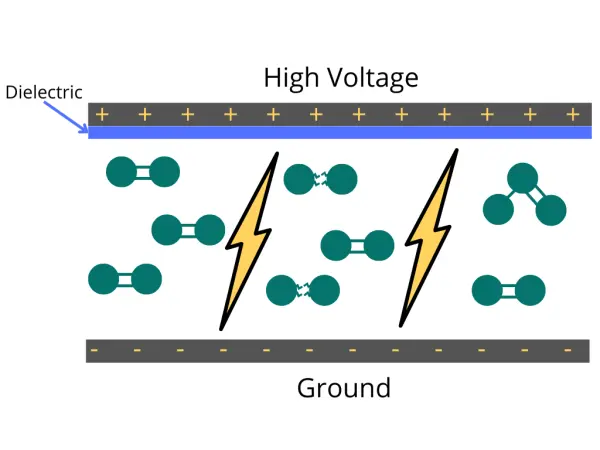
An ozone generator is a device designed to convert oxygen (O2) into ozone (O3). The generator uses energy to dissociate oxygen molecules into individual oxygen atoms, which then react with other oxygen molecules to form ozone.
The resulting ozone gas can be introduced directly into air or transferred into water using an appropriate injection and mass-transfer system. Because ozone decomposes naturally, it is typically generated on-site and used as needed according to the requirements of the application.
Most modern ozone generators use a controlled electrical discharge to provide the energy required to convert oxygen into ozone. Oxygen-containing gas passes through an electrical discharge field created between electrodes separated by a dielectric material.
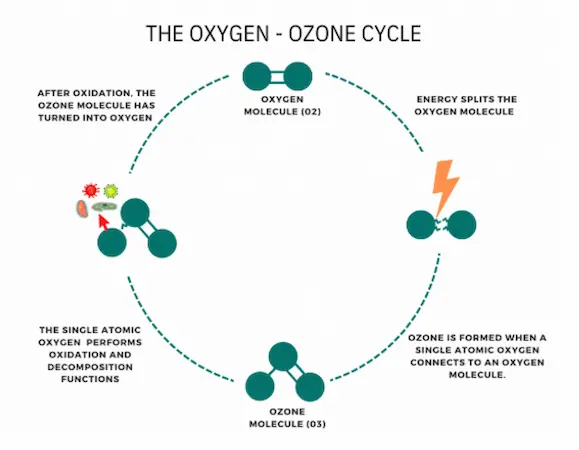
The electrical energy causes a portion of the O2 molecules to dissociate into oxygen atoms. These atoms then react with additional oxygen molecules to form ozone:
O2 + energy → 2O
O + O2 → O3
The resulting ozone is a powerful oxidizing agent. When transferred into water or introduced into a gas stream, it reacts with microorganisms and a wide range of oxidizable compounds.
Industrial ozone generators are designed to provide precise and consistent ozone production for demanding treatment processes. Most use dielectric barrier discharge (DBD), also known as corona discharge or silent electrical discharge.
In these systems, oxygen or an oxygen-enriched feed gas passes through the generator while a high-voltage electrical field is applied across a dielectric barrier. The generator converts a controlled portion of the oxygen into ozone while maintaining the desired production rate and concentration.
Generator performance depends on factors such as feed-gas quality, oxygen concentration, gas flow rate, electrical power, cooling, operating pressure, and generator design. Proper control of these parameters is essential for stable ozone production.
Ozone can be generated using several technologies, with electrical discharge and ultraviolet (UV) radiation being the two most common methods.
Electrical discharge is the primary technology used in modern industrial ozone generators. It uses high-voltage electrical energy to dissociate oxygen molecules and produce ozone.
This method can produce significantly higher ozone concentrations and production rates than UV-based systems, making it well suited for applications requiring substantial ozone production.
UV ozone generators use specific wavelengths of ultraviolet radiation to dissociate oxygen molecules and initiate ozone formation. UV systems generally produce lower ozone concentrations and production rates than electrical-discharge systems.
UV-based ozone generation can be useful for certain low-output applications, while electrical-discharge technology is generally preferred when higher ozone production or concentration is required.
Two important specifications when evaluating an ozone generator are ozone production and ozone concentration. These values describe different aspects of generator performance and should not be considered interchangeable.
Ozone production is the amount of ozone generated over a specific period, commonly expressed in grams per hour (g/h), kilograms per day (kg/day), or pounds per day (ppd).
Ozone concentration describes the amount of ozone present in the product gas. It may be expressed as a percentage by weight, grams per cubic metre (g/Nm3), or other concentration units depending on the application and measurement method.
For water treatment, ozone concentration is particularly important because higher gas-phase ozone concentration can improve ozone mass transfer and help achieve the dissolved ozone concentration required by the treatment process.
For this reason, selecting an ozone generator based solely on its ozone production rating can result in an improperly selected system. Both ozone production and ozone concentration should be evaluated together with the requirements of the treatment process.
Industrial ozone generators and smaller ozone-generating devices marketed for air treatment are designed for different applications and operating requirements.
Industrial ozone generators are designed for controlled ozone production and integration with treatment equipment. They can provide the production rates, ozone concentrations, monitoring, and process controls required for applications such as water treatment, wastewater treatment, aquaculture, industrial oxidation, and odour control.
Smaller ozone-generating devices may be intended for limited-volume applications and generally do not provide the capacity or process control required for industrial treatment systems.
Ozone is a powerful oxidant and can be harmful when inhaled at elevated concentrations. Ozone-generating equipment should therefore be properly installed, operated, monitored, and ventilated according to the application requirements and applicable safety standards.
Because ozone combines strong oxidation with rapid microbial inactivation, ozone generators can be used in many applications.
Understanding how ozone is generated and how ozone generators operate is essential when selecting the right technology for a specific application. From the controlled electrical discharge used to produce ozone to the importance of ozone production and concentration, each aspect of the generation process contributes to the performance of the overall treatment system.
Industrial ozone generators provide a controlled and efficient source of ozone for applications ranging from water and wastewater treatment to food and beverage processing, aquaculture, odour control, and specialized industrial processes. Because ozone is highly reactive and decomposes naturally, proper system design, application-specific dosing, and appropriate safety controls are essential for reliable results.
When properly designed and operated, ozone generation technology provides a powerful and flexible approach to oxidation and microbial control across a wide range of industrial and commercial applications.

By submitting this form, you agree to receive communications from us as described in our privacy policy.