Removal of Residual Ozone from Water
Removing residual ozone from water is a critical step in many industrial and municipal treatment systems to ensure safety, regulatory…
 CONTACT US
Some manufacturers promote “cold plasma” ozone generators as inherently more efficient due to lower plasma temperatures and reduced heat generation. While lower operating temperatures can theoretically improve ozone formation, real-world system performance depends on multiple engineering factors, including dielectric design, cooling efficiency, power density, gas flow optimization, and mass transfer capability.
In practice, many commercially available “cold plasma” ozone generators produce ozone concentrations in the range of 3–5% wt, which can significantly limit ozone dissolution efficiency in water treatment applications.
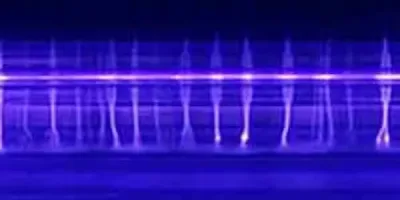
One of the most important factors in ozone dissolution efficiency is ozone concentration by weight (% wt). Higher ozone concentrations generally improve mass transfer efficiency, allowing more ozone to dissolve into water with lower gas consumption.
Many commercially available “cold plasma” ozone generators operate at ozone concentrations of approximately 3–5% wt. While these systems may achieve their advertised ozone production under certain conditions, lower ozone concentrations significantly limit dissolved-ozone performance in practical water treatment applications.
By comparison, the Absolute Ozone® Atlas 30 can produce ozone concentrations as high as 9–12% wt under standard operating conditions.
This higher ozone concentration allows substantially greater ozone dissolution efficiency while using significantly less oxygen.
Consider a 30 g/h ozone generator used in a water treatment system:
Typical “Cold Plasma” Generator
Absolute Ozone® Atlas 30
In practical applications, the Atlas 30’s higher concentration output allows significantly more ozone to dissolve into water, improving oxidation efficiency and reducing overall system demand.
Lower concentration ozone gas contains a larger proportion of carrier gas relative to ozone. This reduces mass transfer efficiency and often requires:
To achieve dissolved ozone performance comparable to a single Atlas 30, multiple low-concentration generators may be required.
For example, three 30 g/h low-concentration generators could consume approximately:
By contrast, a single Atlas 30 can achieve equivalent or superior dissolved ozone performance using only 4 SLPM of oxygen.
| Feature | “Cold Plasma” Generator (30 g/h) | Absolute Ozone® Atlas 30 |
|---|---|---|
| Ozone Concentration | 3–5% wt | 9–12% wt |
| Ozone Dissolved in Water | ≈10 g/h | ≈27 g/h |
| Units Required | 2–3 | 1 |
| Total Oxygen Consumption | ≈36 SLPM (3 × 12 SLPM) | 4 SLPM |
| Total Cost (Approx.) | ≈15,000 USD | ≈5,200 USD |
| Overall Efficiency | Low | High |
The term “cold plasma” is often used as a marketing term rather than a meaningful indicator of ozone system performance.
Ultimately, the most important metrics are:
A properly engineered high-concentration corona discharge ozone generator can often outperform lower-concentration systems while requiring less oxygen, fewer components, and lower long-term operating costs.
When evaluating ozone generators, look beyond advertised ozone production ratings alone.
Real system performance depends on the ability to efficiently dissolve ozone into water while minimizing oxygen consumption, operating costs, and system complexity.
Higher-concentration ozone systems can deliver substantially greater dissolved ozone performance, improved efficiency, and lower overall cost of ownership than lower-concentration alternatives.
For demanding water treatment applications, properly engineered high-concentration ozone generators remain one of the most efficient and cost-effective solutions available today.

By submitting this form, you agree to receive communications from us as described in our privacy policy.