Understanding Off-Gassing in Ozone in Water Systems
Understanding off-gassing in ozone water systems is essential for maintaining safe, efficient, and compliant water treatment operations. Off-gassing occurs when…
 CONTACT US
Ozonation is the process of introducing ozone gas (O3) into a substance, typically water, to purify and disinfect it. Ozone is an unstable form of oxygen (O2) with a powerful oxidizing effect, making it effective at destroying a wide range of pollutants and harmful microorganisms, such as bacteria, viruses, and algae. Ozonation replaces chlorine and other chemical disinfectants in water treatment, offering an environmentally friendly and efficient alternative.
Ozone is a triatomic form of oxygen with the chemical formula O3. Its three oxygen atoms strongly influence its reactivity; the extra oxygen atom can easily attach to other substances. That means ozone is an unstable molecule that decomposes into oxygen molecules. So, it must be generated on-site as used. The Typical half-life of ozone at 20 C is 3 days and 20 minutes when ozone is dissolved in water.
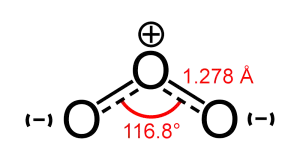
Industrial ozone generation is typically done using a process in which high-voltage electrical energy is applied to an oxygen-rich gas mixture. It is simply a diffused spark through a dielectric to spread out the electrical discharge to a large area. In this method, the electric charge applied to the electrodes causes some oxygen molecules to split apart and temporarily combine with other oxygen molecules making a molecule of three oxygen atoms (O3).
The ozonation process involves introducing ozone gas into the water being treated. This can be done using a venturi injector to dissolve ozone directly into the water. Once ozone is in the water, it reacts with contaminants and pollutants, breaking down their chemical structures and rendering them harmless. Ozone is a strong oxidant and virucide widely used for drinking water disinfection and wastewater treatment plants. The effectiveness of a biocide in the ozonation system is normally described by its concentration-time or CT value, which is defined as a product of the average concentration of ozone(residual ozone) multiplied by the exposure time
Ozonated water is water that has been infused or treated with ozone (O3). It readily reacts with other substances, often breaking them down or neutralizing contaminants. When ozone is introduced into water, it serves several purposes, including:
Ozone is a very strong oxidant and virucide widely used for disinfection; it destroys bacteria by inducing protoplasmic oxidation, resulting in cell wall disintegration.
The effectiveness of a biocide in the ozonation system is normally described by its concentration-time or CT value, which is defined as a product of the average concentration of ozone( residual) multiplied by the exposure time
| Inactivation By | Temp 5ºC | Temp 10ºC | Temp 20ºC | Temp 25ºC |
|---|---|---|---|---|
| Chlorine dioxide | 33.4 | 25.1 | 12.5 | 8.4 |
| Ozone | 1.2 | 1.0 | 0.5 | 0.3 |
| Inactivation By | Temp 5ºC | Temp 10ºC | Temp 20ºC | Temp 25ºC |
|---|---|---|---|---|
| Chlorine dioxide | 26 | 23 | 15 | 11 |
| Ozone | 1.9 | 1.43 | 0.72 | 0.48 |
Source: Water and Wastewater Engineering: Design Principles and Practice, Mackenzie L.
Ozonation is an efficient and effective way to purify water, offering a range of benefits over traditional methods such as chlorination. Here are some of the key benefits of ozonation for drinking water purification:
Feed Gas:
Oxygen-feed ozone generators are the best choice for all industrial applications.
We recommended using PSA Oxygen concentrators to produce Ozone
oxygen concentrator produces oxygen with 90-95% of purity
Oxygen feed Ozone generator results in a concentration of 4-20 wt.%
Air feed Ozone generator results in a very lower concentration of 1-3 wt.% (not suitable for ozonation)
Air-feed generators are not suitable for most industrial applications. Remember that only 21% of air is oxygen this significantly affects the ozone concentration that a generator can achieve. In addition, inside the cells, the remaining 78% of the nitrogen will form nitric oxide deposits. In this way, ozone production will gradually decrease after a few months. lear more
Ozone Generators:
Absolute Ozone® – ozone generators are equipped with a Dielectric Barrier Plasma Discharge cell. Air-colled Absolute Ozone® generators produce ozone at very high concentrations, typically in the range of 5 to 16 wt.%.
Ozone Mass Transfer:
Ozone needs to be dissolved in water. Ozone is partially soluble in the liquid; its solubility depends on factors such as temperature, pressure, and concentration. However, high mass-transfer efficiencies can be achieved with appropriate methods and equipment. Venturi-based mass transfer systems are preferred for dissolving ozone in water due to their simplicity, economy, and effectiveness. A venturi injector is about 90% efficient and can be up to 99% efficient at dissolving ozone into the water.
There are several mechanisms by which ozone can degrade organic pollutants, including direct oxidation and indirect oxidation through the formation of hydroxyl radicals. In direct oxidation, ozone reacts directly with the pollutant molecule, breaking chemical bonds and forming smaller, less harmful compounds.
In indirect oxidation, ozone reacts with water to form hydroxyl radicals, which are highly reactive and attack organic pollutants. This reaction results in the degradation of the pollutant into smaller, less harmful compounds.
The rate at which organic pollutants are degraded by ozone depends on several factors, including the nature of the pollutant, the ozone concentration, and the water pH. In general, ozone is most effective at degrading simple organic pollutants, such as alcohols and aldehydes, whereas it is less effective at degrading more complex pollutants, such as chlorinated compounds.
Ozone has been shown to be effective at removing a wide range of organic pollutants, including:
Contact us if you need more information about your ozonation process

By submitting this form, you agree to receive communications from us as described in our privacy policy.