
Match Ozone Generation to Your Nanobubble Platform
Your nanobubble technology determines how ozone must be supplied. Absolute Ozone helps manufacturers and system integrators match ozone output, concentration, gas flow, pressure, oxygen supply, control interface, and installation format to the platform they already build or integrate.
We do not manufacture the nanobubble generator. We supply the ozone-generation side and can review the gas-side equipment required to connect it reliably to your process.
Whether you are developing a pilot unit, integrating ozone into a packaged skid, building an OEM cabinet, or scaling an established product line, start with the requirements at the ozone-gas connection point.
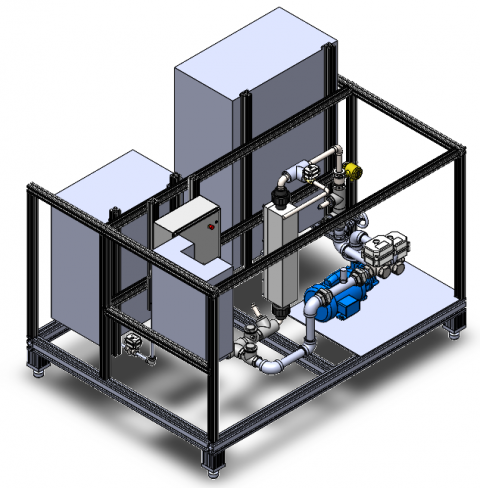
You Already Know the Nanobubble Process. We Help You Feed It the Right Ozone.
This page is for nanobubble equipment manufacturers, OEMs, and integrators that already use—or are actively designing around—ozone.
The primary question is not whether nanobubbles can be useful. It is whether the ozone source matches the gas-side conditions your equipment requires.
A successful integration begins by aligning the ozone generator with the nanobubble system’s required ozone mass output, gas concentration, flow, pressure, operating duty, materials, control logic, and safety strategy.
Do not select the ozone generator from liquid flow alone. Start with the required gas-side conditions at the nanobubble equipment inlet.
Required Mass Output and Operating Range
Define the required ozone output, normal operating point, maximum requirement, and expected turndown or modulation range.
Ozone Concentration and Feed-Gas Basis
Confirm the required ozone concentration and whether the nanobubble process is designed around oxygen-fed ozone, another approved feed-gas condition, or a specific gas-flow window.
Gas Flow, Inlet Pressure, or Vacuum Condition
Provide the gas flow accepted by the nanobubble equipment and the pressure or vacuum condition at the ozone connection point.
Operating Schedule and Control Method
Define continuous or intermittent operation, required modulation, start and stop logic, alarms, and the signal expected from the integrator’s controller.
Cabinet, Skid, Rack, or Standalone Installation
Identify available space, mounting orientation, enclosure requirements, access for service, electrical supply, and applicable certification needs.
Backflow, Materials, Monitoring, and Off-Gas
Confirm gas-path materials, anti-backflow protection, monitoring, ventilation, ozone destruction, and the integrator’s safety strategy.
Connect the Ozone Source to the Nanobubble Platform Without Blurring System Responsibility
The exact equipment scope varies, but the interface should make the ozone-generation boundary clear. Absolute Ozone can support the ozone side while the nanobubble manufacturer or integrator retains control of the liquid process and final system performance.
TYPICAL ABSOLUTE OZONE SCOPE (STAGES 01–04)
01
Provide Feed-Gas Quality
Match purity, flow, pressure, dryness, and supply method to the selected ozone-generator configuration.
02
Generate Required Output
Select the generator family and model from mass output, concentration, pressure, duty, and control specs.
02
Generate Required Output
Select the generator family and model from mass output, concentration, pressure, duty, and control specs.
03
Condition the Gas
Regulate flow and verify delivery pressure or vacuum condition matches the nanobubble equipment.
TYPICAL OEM / INTEGRATOR SCOPE (STAGES 05–07)
05
Introduce Ozone
Integrator controls the gas-liquid mixing technology, pump selection, and bubble generation.
06
Apply Stream
Integrator defines the process tank, circulation loop, contact conditions, and downstream handling.
07
Verify & Manage Gas
Monitoring, ambient alarms, ventilation, destructors, and verification selected for jurisdiction.