FAQ About Ozonated Water for Farms, Hydroponics, and Growers
This FAQ on ozonated water for farms, hydroponics, and growers explains how ozone technology can improve water quality, reduce pathogens,…
 CONTACT US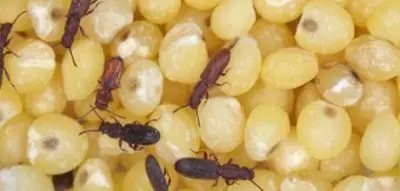
The loss of grain in storage, whether caused by living things such as insects, pests, rodents, and fungi, or by physical rather than biological factors such as temperature or moisture, leads to global losses exceeding 80 million metric tons in stored grain. Most of the time, Aluminum Phosphide is used for fumigation, though it can be dangerous. Also, insects and pests have developed resistance to phosphine. Other fumigants, such as carbonyl sulphide, ethyl formate, hydrogen cyanide, methyl iodide, and propylene oxide, are more expensive than phosphine (Singh and Sharma 2015). On the other hand, several studies have demonstrated that ozone is effective in treating the grain with the advantage of not affecting its quality when properly controlled doses and exposure time are used.
Ozone gas has been successfully used as the best alternative fumigant for stored-product insects. Various works on using ozone as a greener alternative to commercial fumigants have been studied.
The effect of ozone treatment in terms of ozone concentration and exposure time on selected food grains and insect fumigation is summarized in the following table.
| Target | Concentration / Exposure Time | Significant Results | Reference |
|---|---|---|---|
| Adults of Callosobruchus maculates and C. Chinensis L | 0.25, 0.5, 1.0, 1.5 and 2 g/m3; 1, 3, 5 and 7 days | C. maculates – 100% at 1.0, 1.5 and 2.0 g/m3 for 7 days; C. Chinensis – 100% at all concentrations | (Gad et al. 2021) |
| Adult, larva, pupa, and eggs of Callosobruchus maculatus | 500–1500 ppm; Adults – 120 to 270 minutes; Larvae – 540 to 1110 minutes; Pupae – 480 to 1230 minutes; Eggs – 660 and 1500 minutes | Adult – 100%; Larvae – 100%; Pupae – 100%; Eggs – 100% under tested exposure conditions | (Ravi Pandiselvam et al. 2019) |
| Tribolium castaneum, Oryzaephilus surinamensis, Sitophilus zeamais, Sitophilus oryzae | 200 ppm; 1, 2, 3, 5, 6, 8, 10, and 12 hours assessed for 5 days | 100% mortality for Sitophilus spp and O. surinamensis; 90% for T. castaneum | (Xinyi, Subramanyam, and Li 2017) |
| Rhyzopertha dominica adults | 0.42 and 0.84 g/m3; 36 and 30 hours for 5 days | 99% | (Subramanyam et al. 2017b) |
| Eupteryx Decemnotata | 120 and 595 ppm; 2 and 10 minutes | 33.88–71.90% at 120 ppm for 2 minutes; 70.24–91.66% at 595 ppm for 10 minutes | (Kopacki et al. 2017) |
| Adult, larva, pupa, and eggs of Lasioderma serricorne (F) | 150, 250, 350, and 450 ppm with varying exposure times by life stage | 99% | (Anandakumar, Shubhashini, et al. 2016) |
| Adult, larva, and pupa of Stegobium paniceum L. (Drugstore beetle) | 150, 250 and 350 ppm with varying exposure times | 100% mortality in adults; 99% in larvae and pupae | (Anandakumar, Singh, et al. 2016) |
| Ephestia castella larvae | 22 ppm; 24 hours | 100% | (Husain et al. 2015) |
| Adults of Oryzaephilus surinamensis L. and larvae of Ephestia kuehniella Zeller | 2, 3 and 5 ppm; 15, 30, 45, 60, and 90 minutes | 100% at 5 ppm for 90 minutes | (Sadeghi, Mirabi Moghaddam, and Taghizadeh 2017) |
Source: Boopathy et al. (2022)
Stored grain can be treated with ozone gas to reduce fungal levels and mycotoxin levels. Guiseppe et al. (2020) summarize studies showing that ozonation removes mycotoxins and detoxifies contaminated agricultural products—approximately 400 mycotoxins, of which 30 are considered dangerous to humans and animals. Ozone treatment was able to degrade more dangerous mycotoxins in many food/feed portions and several operational conditions.
| Target | Concentration / Exposure Time | Food / Matrix | Significant Results | References |
|---|---|---|---|---|
| AFB1 | 20 and 40 g m−3 of gaseous O3 for 5, 10, 15, and 20 min | Wheat grains | Total reduction of AFB1 after 10, 15, and 20 min of exposure | Luo et al. 2014 |
| AFB1 | 4 and 8 g m−3 of aqueous O3 for 2, 4, 6, 8, 10, and 12 h | Pistachio kernels | Reduction by 48%, 13%, 46%, 44%, and 44% after 2, 4, 6, 8, 10, and 12 h | Nooghi et al. 2016 |
| AFB1, AFB2, AFG1, and AFG2 | 15, 30, 45, and 75 g m−3 of gaseous O3 for 60 min | Corn flour | Reduction of AFB1, AFB2, and AFG1 by 79%, 71%, and 72% at 75 g m−3 | Wang et al. 2016 |
| DON | 10 mg m−3 of gaseous O3 for 30 s | Wheat | Reduction by 94% | Venter et al. 2014 |
| AFB1, AFB2, AFG1, and AFG2 | 8.5, 13.5, 20, 25, and 40 g m−3 of gaseous O3 for 20 min | Aflatoxins dissolved in water | Rapid elimination of AFB1 and AFG1 | Proctor et al. 2014 |
| DON | 100 g m−3 of gaseous O3 for 1 h at 20% moisture | Wheat flour | Reduction by 78% | Kouchesfahani et al. 2015 |
| Aflatoxins and DON | 60 g m−3 of gaseous O3 for 300 min | Wheat grains | Reduction of aflatoxins and DON by 64% and 48%, respectively | EPA 2016 |
| DON, HT-2 toxin, T-2 toxin, and ZEA | 20 g m−3 of gaseous O3 for 40 and 130 min | Wheat grains | Reduction of HT-2, T-2, and ZEA by 65%, 62%, and 59% after 40 min. Reduction of DON by 25% after 130 min | Li et al. 2019 |
| ZEA and OTA | 100 g m−3 of gaseous O3 for 180 min | Corn | Reduction of ZEA and OTA by 91% and 71%, respectively | Dodd et al. 2013 |
| DON | 80 g m−3 of aqueous O3 for 10 min | Contaminated wheat, corn, and bran | Reduction by 75%, 71%, and 76%, respectively | Kouchesfahani et al. 2015 |
| DON | 65 g m−3 of aqueous O3 for 60, 120, and 180 min at 10% and 25% moisture | Wheat flour | Reduction by 70%, 70%, and 78% in wheat flour after 60, 120, and 180 min at 25% moisture | Li et al. 2015 |
| DON and DON-3-Glc | 40 g m−3 of gaseous O3 for 6 h | Wheat grains, semolina, and pasta | Reduction of DON and DON-3-Glc by 29% and 44% | Alexandre et al. 2017 |
| ZEN | 50 g m−3 of aqueous O3 for 90 min | Corn flour | Reduction by 95% | Sun et al. 2016 |
Source: Giuseppe et al. (2020)
Applied ozone gas has given promising results for important issues in the food industry, such as mycotoxin contamination and pesticide residues. A particular benefit of O3 is its ability to inhibit fungal growth, sporulation, and germination without losing nutrients or sensory qualities. Ozone concentration, contact time, and other treatment conditions should be defined for foods and feed to ensure their effectiveness and safety in processing. Since every application is unique, the concentrations and contact times shown before are only guidelines. In the published studies in the use of ozone in grain storage, there were discrepancies in the effect of ozone gas on insects, microorganisms, and mycotoxins. These discrepancies might be caused by the highly reactive nature and short half-life time of O3 that limit O3 penetrating grain mass and grain kernels. Therefore, the most failures by various investigators might be their inability to distinguish between the concentration of applied O3 and O3 reacting with microorganisms, mycotoxins, and insects.
In conclusion, ozone treatment is a superior alternative to chemical fumigants for grain storage. Its ability to eliminate pests without leaving harmful residues makes it a safer and more sustainable choice for protecting grain quality and ensuring food safety.
Get in touch with us today for more information!

By submitting this form, you agree to receive communications from us as described in our privacy policy.