
Uses of Zeolite for Ozone Destruction
Proper ozone generator sizing is essential for achieving effective oxidation, disinfection, and water treatment performance. An undersized ozone system may fail to meet treatment requirements, while an oversized system can increase operating costs and reduce overall efficiency.
Accurate ozone sizing depends on understanding ozone demand, system flow rate, ozone dissolution efficiency, and natural ozone decay. This guide explains the key factors involved in sizing an ozone generator for industrial, commercial, and water treatment applications.
Why Ozone Destruction Is Important
Not all ozone produced in an ozone treatment system reacts during oxidation. Excess ozone, commonly called off-gas ozone, may remain after water treatment or air treatment operations.
Residual ozone gas must typically be removed before discharge to:
- Reduce ozone exposure
- Improve workplace safety
- Protect surrounding equipment
- Support regulatory compliance
- Minimize ozone release into occupied areas
Ozone destruct systems are commonly installed in industrial ozone applications to safely decompose excess ozone gas.
What Is Zeolite?
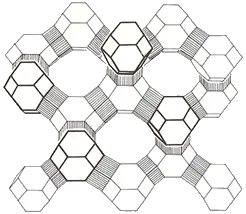
Zeolite is a porous mineral material widely used in adsorption, filtration, drying, and catalytic applications.
Because of its high internal surface area and adsorption properties, zeolite can support ozone decomposition reactions in ozone destruct systems.
Zeolite materials are commonly used in industrial processes requiring gas treatment and oxidation control.
How Zeolite Helps Destroy Ozone
Zeolite materials can help accelerate the natural decomposition of ozone into oxygen.
When ozone passes through a zeolite-based destruct media bed:
- Ozone molecules contact the media surface
- Ozone decomposes into oxygen
- Residual ozone concentration is reduced
The large surface area of zeolite materials helps promote efficient ozone decomposition in properly designed systems.
Benefits of Using Zeolite for Ozone Destruction
Zeolite-based ozone destruct systems may offer several advantages, including:
- Reliable ozone decomposition
- Low operating temperature
- Minimal moving parts
- Low maintenance requirements
- Energy-efficient operation
- Compact system design
Properly designed ozone destruct systems help improve overall ozone system safety and reliability.
Zeolite vs Thermal Ozone Destruction
Different ozone destruction methods are used depending on the application and operating conditions.
| Feature | Zeolite Ozone Destruction | Thermal Ozone Destruction |
|---|---|---|
| Operating Temperature | Low | High |
| Energy Consumption | Low | Higher |
| System Complexity | Lower | Higher |
| Moving Parts | Minimal | May Require Additional Components |
| Common Applications | Industrial ozone systems | High concentration systems |
The optimal ozone destruction method depends on ozone concentration, gas flow, and system design requirements.